Showing posts with label newspaper clip. Show all posts

Wednesday, April 23, 2014

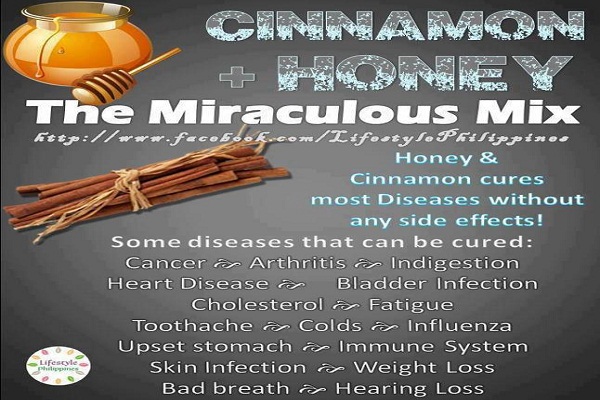
Mixing Honey and Cinnamon Cures Most Diseases


Today’s Science Has Found That Mixing Honey and Cinnamon Cures Most Diseases

Interesting stuff!!
Cinnamon and Honey
Drug companies won’t like this one getting around. Facts on Honey and Cinnamon:
It is found that a mix of honey and Cinnamon cures most diseases. Honey is produced in most of the countries of the world. Scientists of today also note honey as very effective medicine for all kinds of diseases. Honey can be used without side effects which is also a plus.Today’s science says that even though honey is sweet, when it is taken in the right dosage as a medicine, it does not harm even diabetic patients. Researched by western scientists:
Today’s Science Has Found That Mixing Honey and Cinnamon Cures Most Diseases

Pope charged with child trafficking and ritual murder


Public Information Update: The People v. Bergoglio, Pachon, Welby and Others Charged With Global Child Trafficking and Ritual Murder

Public Information Update from The Prosecutor’s Office of The International Common Law Court of Justice
Bulletin No. 3: Thursday, April 17, 2014 – 10 pm GMT
In the Matter of the People v. Bergoglio, Pachon, Welby and others charged with global child trafficking and ritual murder
alarm-alarmhabt-angst-und-schiebt-panik-L-7gvZFR
Summary:
The Court adjourns for two weeks after the first round in the Prosecutor’s Case discloses the startling testimony of eight witnesses.
Two separate witnesses describe their alleged rape and ritual torture by chief defendant Jorge Bergoglio (alias “Pope Francis”) in 2009 and 2010.

Monday, April 21, 2014

Man with a face in the back of his head


The Story of Edward Mordrake

Edward Mordrake was a 19th century English nobleman who had an extra face on the back of his head. According to the story, the extra face could neither eat nor speak, but it could laugh and cry. Edward begged doctors to have his ‘devil twin’ removed, because, supposedly, it whispered horrible things to him at night, but no doctor would attempt it. He committed suicide at the age of 23 by poisoning himself because he could no longer stand having to live with the face on the back of his head.
image

"The true tale of Edward Mordake (Mordrake) has been lost to history. His unusual case occurred early in medical history and is referenced only in tales handed down. Indeed, the tale of his life has become so muddled through the passage of time that no solid date of birth or death is evident to modern researchers.
image
The story always begins the same way. Edward is said be have been heir to one of the noblest families in England. He was considered a bright and charming man – a scholar, a musician and a young man in possession of profound grace. He was said to be quite handsome when viewed from the front – yet, on the back of his head there was a second face, twisted and evil.
In some versions of the story, the second face of Edward is a beautiful girl. This is an impossibility as all parasitic twins are of the same sex. Often it was said that it possessed its own intelligence and was quite malignant in its intentions. It has been said that the eyes would follow spectators and its lips would ‘gibber’ relentlessly and silently. According to legend it would smile and sneer as Edward wept over his condition. While no voice was ever audible, Edward swore that often he would be kept awake by the hateful whispers of his ‘evil twin’. 
The story has always concluded with young Edward committing suicide at the age of twenty-three. The method of his death also differs, sometimes poison does him in and in other versions a bullet ‘between the eyes of his devil-twin’ puts him out of his misery. In both versions Edward leaves behind a letter requesting that the ‘demon face’ be destroyed before his burial, ‘lest it continues its dreadful whisperings in my grave.’Is the story of Edward true?  
The 1896 text Anomolies and Curiosities of Medicine mentions a version of the story and Edward has been featured in many texts, plays and even music as the Tom Waits song ‘Poor Edward’ is based on the story. However, the tale was considered false for quite some time. It was simply too fantastic to believe and, obviously, many parts of the story simply do not make medical sense – years of retelling warped what was likely a very real occurrence.

image
How can one make the assumption that there is fact beneath this tale?
Chang Tzu Ping was discovered in China in the late 70’s or early 80’s. In his 40’s, Chang had been born with a second face consisting of a mouth, a malformed tongue, several teeth, a patch of scalp, and the vestige of other facial constructs. The throat and the lips of the second face could not move independently, but the mouth did reacted in tandem to Chang opening his. 
Shortly after being discovered he was brought to the United States to have the second face surgically removed. The entire case was documented – including the surgery – on the 80’s television program ‘That’s Incredible’ - and yet there exists almost no secondary evidence of his existence. The operation was considered successful and Chang likely went home to his village to live the remainder of his life without his ‘devil face’.
It does not require a great leap of faith to conclude that the tale of Edward is based on some nugget of fact, perhaps he had something similar Chang’s condition – mutated by storytellers over time. Consider that the case of Chang Tzu Ping is relatively unknown despite only occurring a few decades ago or the strange tale of The Boy of Bengal. These are indeed very rare cases and the human mind has a tendency to classify the unusual as impossible – it often helps us sleep well at night.
Tom Waits’ song: Poor Edward

Sunday, April 20, 2014

PTSD and Mental Health: How America’s Wars Came Home With the Troops

PTSD and Mental Health: How America’s Wars Came Home With the Troops

‘After an argument about a leave denied, Specialist Ivan Lopez pulled out a .45-caliber Smith & Wesson handgun and began a shooting spree at Fort Hood, America’s biggest stateside base, that left three soldiers dead and 16 wounded. When he did so, he also pulled America’s fading wars out of the closet. This time, a Fort Hood mass killing, the second in four and a half years, was committed by a man who was neither a religious nor a political “extremist.” He seems to have been merely one of America’s injured and troubled veterans who now number in the hundreds of thousands.
Some 2.6 million men and women have been dispatched, often repeatedly, to the wars in Iraq and Afghanistan, and according to a recent survey of veterans of those wars conducted by the Washington Post and the Kaiser Family Foundation, nearly one-third say that their mental health is worse than it was before they left, and nearly half say the same of their physical condition. Almost half say they give way to sudden outbursts of anger. Only 12% of the surveyed veterans claim they are now “better” mentally or physically than they were before they went to war.’

Friday, April 18, 2014

Students Find Dead Classmate’s Brain Floating in a Jar of Formaldehyde


This is one of those crazy “believe it or not” news stories.
Classmates of Jesse Shipley, a 17-year-old boy who was killed in a car accident in 2005, spotted his brain floating in a jar of formaldehyde while on a forensic science club field trip at the Staten Island Mortuary two months after his death. The jar was apparently in a cabinet but was labeled clearly with Jesse’s name.
Word traveled quickly back at Port Richmond High School to Jesse’s younger sister Shannon, then 15, who was a victim in the same car accident that killed her older brother. Her parents were called to pick her up from school because she was so upset.
Now Jesse and Shannon’s parents Andrew and Korisha Shipley are suing the medical examiner for emotional distress. Five years after the fact, Justice William F. Mastro has determined that the family should have been told that their son’s brain was being retained for later study. Yes, such a simple thing.
The family was, instead, under the assumption that their son’s body was intact at burial.


Thursday, April 17, 2014

Amazing Things Scientists Have Discovered About Psychedelics

Psychedelics have the potential to treat cancers, addiction and psychological traumas.
Photo Credit: agsandrew / Shutterstock.com
The government’s "war on drugs" policies severely limit research on psychedelics. Before scientists can complete any federally sanctioned studies, they have to jump through an expensive tangle of hoops and red tape. Restrictions aside, over the years researchers have collected a database of research showing that many psychedelics have an unprecedented potential to treat cancers, addictions and psychological traumas, among other things.
Here are some of the coolest things scientists have discovered about psychedelics over the years.
1. LSD can mitigate end-of-life anxiety.
The results of the first clinical study of the therapeutic use of LSD (lysergic acid diethylamide) in humans in more than 40 years were published in the peer-reviewed Journal of Nervous and Mental Disease in March. They show that LSD can promote statistically significant reductions in anxiety for people coming to terms with their own impending demise.

The Green Children

The Green Children

The Green Children of Woolpit were two children who appeared in the village of Woolpit in Suffolk, UK, in the 12th century. The children were brother and sister and they had green colored skin. Their appearance was normal in all other areas. They spoke an unrecognized language and refused to eat anything other than pitch from bean pods. Eventually their skin lost its green color. When they learned English they explained that they were from the ‘Land of St Martin’ which was a dark place because the sun never rose far above the horizon. They claimed that they were tending their father’s herd and followed a river of light when they heard the sounds of bells – finding themselves in Woolpit. Some of the more unusual theories proposed for the origin of the children are that they were Hollow Earth children, parallel dimension children, or Extraterrestrial children.

The Pollock Twins

In 1957, two sisters Joanna (11) and Jacqueline Pollock (6) were tragically killed in a motor accident in Northumberland, England. One year later, their mother gave birth to twins Jennifer and Gillian. Remarkably, the younger twin, Jennifer, had birth marks on her body in exactly the same place as Jacqueline had them. The coincidences don’t stop there, either. Before too long the twins were requesting toys belonging to the deceased girls which they had no prior knowledge of, and desiring to visit a park they had never been to. A well-respected psychologist at the time, one Dr. Ian Stevenson, studied the case in-depth and concluded it was likely the twins were reincarnations of their departed sisters.

Wednesday, April 16, 2014

Tasting with our eyes - (NPR)

Does this blue chicken make you queasy?  Scientists say there is a reason for that.
There's something unsettling — freakish, even — about Lawrie Brown's photos of everyday meals.
In one photo, the California-based photographer has placed a shockingly blue raw chicken atop a bed of rice and peas. In another, pink cereal puffs float in a sea of yellow milk. And Brown slathers three hefty scoops of green ice cream with purple fudge in a third, with blood-red cherries as garnish. Other photos in her "Colored Food Series" feature green corn, blue crackers and green spaghetti.
These dishes are familiar, but their natural colors have been swapped for bizarre tones. Instead of roast chicken food porn, Brown gives us an unappetizing, alien-looking chicken. And the pure white we're so used to seeing in the cereal bowl has been replaced with a sort of yellow goop.
Cereal comes in all shapes, sizes and artificial colors. But it looks a little less fun when it's soaking in yellow milk.
Courtesy of Lawrie Brown
Some of these colors, like the blue on the chicken and the green on the corn, are latex paint. But the pink cereal, the green ice cream and the vibrant block of cheddar cheese were sold in those eye-popping colors.
Brown says the project came about as she started hearing about food additives, and the more she learned the more fascinated — and repulsed — she grew.    Health advocacy groups say there's mounting scientific evidence linking artificial food dyes to behavioral issues in children. The Food and Drug Administration is currently probing that link.

Monday, April 14, 2014

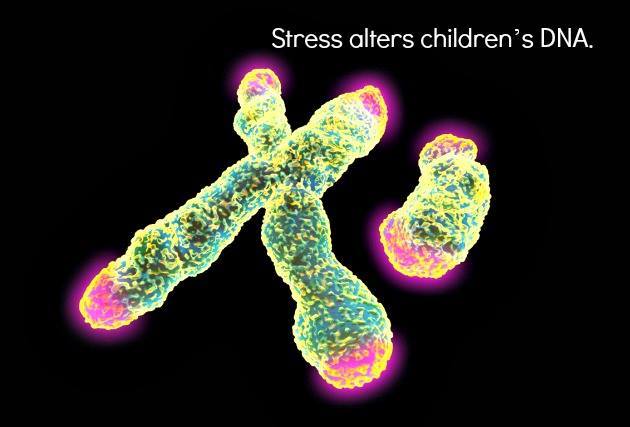
Stress alters children's DNA

Children who grow up in poverty or an unstable family show early signs of genetic ageing that may make them more vulnerable to certain diseases, a study has found.
Telomeres, the protective caps that prevent the ends of chromosomes from unravelling over time, were shorter in children who had a severely disadvantaged upbringing compared with children from privileged backgrounds.

The research highlights the effect a stressful environment can have on health from a young age.
While it is well known that chronic stress has negative health effects, the exact mechanism remains elusive, although shortened telomeres are thought to be a ''biomarker'' of the effect of stress on the body.

The ends of telomeres shrink each time a cell divides, a sacrifice that protects the genetic information at the ends of chromosomes. But when telomeres get too short, cells can no longer divide, and die. Many age-related diseases including cancer have been linked to shortened telomeres.
US researchers studied 40 African American boys and found, by the time they were nine, the telomeres of the children who grew up in a harsh home environment were almost 20 per cent shorter than those from advantaged backgrounds.

Boys whose mothers had more than one partner by the time they were nine had telomeres 40 per cent shorter than boys who had grown up in a more stable family.
The level of education of mothers was also associated with longer telomeres in offspring.
''We document significant associations between low income, low maternal education, unstable family structure, harsh parenting and telomere length,'' said study leader Daniel Notterman, of Pennsylvania State University.

The group, who published their results in journal Proceedings of the National Academy of Sciences, also found that specific gene sequences could increase how sensitive a child was to their environment.
The effect of these genes, which code for the brain the neurotransmitters serotonin and dopamine,
could amplify the stress of harsh environments for some children and magnify the advantage of privileged environments for others.

''Our findings suggest that an individual's genetic architecture moderates the magnitude of the response to external stimuli, but it is the environment that determines the direction,'' University of Michigan researcher Colter Mitchell said.
Previous research has shown children in Romanian orphanages had shorter telomeres than children who grew up in foster care.
The researchers studied African American boys because previous studies had been conducted almost exclusively on white children and other research had found boys were more sensitive to a bad home situation than girls, they said.

A 2012 report by the Australian Institute of Health and Welfare said many aspects of health, such as diet and smoking status, were related to wealth. In 2010, one quarter of people living in the lowest socioeconomic areas smoked tobacco, twice the rate of people living in wealthy areas.
In NSW, males born to well-off parents were expected to live about four years longer than babies born into poor, uneducated families.

Sunday, April 13, 2014

Will Fake Sugars Kill You?

Will Fake Sugars Kill You?

| Fri Nov. 22, 2013 10:26 AM PST
Sugar kills. The delicious white crack has been linked to obesity, heart disease, type 2 diabetes, cancer, and Alzheimer's. So what's a person with a sweet tooth to do? Artificial sweeteners are a tempting choice, since they don't have calories or rot your teeth, and they're recommended for people with diabetes. But some of the fake stuff comes with its own potential health risks: Links to cancer in animal studies, reported side effects of dizziness and headaches, and exacerbated stomach problems, to name a few. And in one case, an artificial sweetener that the FDA had proposed banning was kept on the shelves after an aggressive advertising campaign from the pro-sweetener lobbying industry. Peggy Ballman, a spokesperson for Splenda, tells Mother Jones that, "We always encourage people to make informed choices by reviewing the credible research available." So without further ado, here's everything you need to know about the safety of your favorite fake sugar. 
1. Stevia (Brand names: Truvia, PureVia) 

Truvia.com
What is it? Stevia is short for Stevia Rebaudiana, a plant from the Chrysanthemum familythat grows in parts of Brazil and Paraguay. The compound that makes the Stevia sugar is extracted from the leaves. It's used in the EU, East Asia, Russia, Mexico, Israel, and many South American countries, and is about 200 to 300 times sweeter than sugar.
When did the FDA approve it? In the 1990s, the FDA rejected Stevia as a food ingredient after research linked it to reproductive problems and possible genetic mutations in rats. In 2008, the FDA approved a specific formula of pure Stevia—Rebaudioside APureVia and Truviaboth contain the Reb A version of Stevia, which is FDA-approved. The FDA recommended daily dosage is no more than 1.3 milligrams per kilogram of body weight, for healthy adults. You'd need to have at least 29 Truvia packets a day to exceed that. 
What do the experts say? If your Stevia isn't made from Reb A—like, for example, thewhole-leaf extract version that's sold at natural food markets and labeled as a "dietary supplement"—it hasn't been vetted for safety by the FDA. For Truvia and PureVia, the FDAconcluded with "reasonable certainty that Reb A is not harmful under its intended conditions of use" based on studies it looked at concerning reproductive, blood pressure, and toxicity effects. Although scientific studies in the 1960s and 1980s found that Stevia-derived productsdecreased fertility in female rats and potentially led to mutations, the FDA concluded that those problems didn't apply to Reb A, based on additional research. (The World Health Organization has also determined that Reb A has no cancer link.) The FDA did note that one form of Stevia was deadly to rats at a dose of 15,000 milligrams per kilogram of body weight, but that's an enormous amount of Stevia. Atalanta Rafferty, a spokesperson for Truvia, says that "A panel of independent experts reviewed a dossier of all available toxicity and safety information relevant to Truvia stevia leaf extract, and concluded that Truvia stevia leaf extract is safe." Pura Via says on its website that, "An extensive library of more than 85 studies exists for Reb A and other components of the stevia plant which supports Reb A’s use in tabletop sweeteners." 
2. Aspartame (Brand Names: Equal, NutraSweet)

Soap.com
What is it? Aspartame is made up of two amino acids, aspartic acid and phenylalanine, and methanol, all of which are found in common foods. It's about 200 times sweeter than sugar.
When did the FDA approve it? It was approved in the United States for limited use in 1974. But if you're taking more than 50 milligrams per kilogram of body weight a day, you're exceeding the FDA's recommended daily limit. (A 165-pound person would have to be drinking more than 20 cans of diet coke to exceed that.)
What do the experts say? Aspartame has been controversial for decades. In 1987, theGovernment Accountability Office investigated the FDA after the sweetener was approved. It determined that the "FDA adequately followed its food additive approval process," but noted that 12 of the 69 scientists interviewed by GAO expressed "major concerns" about aspartame's safety.
In 2006, cancer researchers in Bologna, Italy, released the results of a $1 million, seven-year study of the use of aspartame in rats. The team found that, at a dosage equivalent to a 150-pound person drinking at least four 20-oz bottles of diet soda daily, the sweetener caused cancer in the animals. But the FDA shot down the study, noting that the researchers wouldn't give them all of their information, and found major shortcomings in the data that was available. According to the FDA, five other cancer studies found that the sweetener was safe. The American Cancer Society says on its website, "Aside from the possible effects in people with phenylketonuria [a rare genetic disorder], there are no health problems that have been consistently linked to aspartame use​" but adds that "research continues." The Center for Science in the Public Interest recommends that Americans avoid it on the basis that theindependent studies have found that consumption of aspartame causes cancer in rodents (although again, not in humans), and it's been anecdotally linked to other health issues. In a 2002 FDA report, reported aspartame side effects included nausea, heart palpitations, headaches and depression, among other things. NutraSweet and Equal both say that its products are very safe. "Aspartame offers one simple step in helping people move closer to achieving a more healthful diet," notes NutraSweet's website. 
3. Sucralose (Brand Name: Splenda)

Splenda
What is it? Sucralose is a chemical that's produced by chemically reacting sugar with chlorine. It's about 600 times sweeter than sugar. 
When did the FDA approve it? Sucralose was approved in 1998. The FDA recommended daily dose is 5 milligrams per kilogram of body weight. 
What do the experts say? There have been more than 110 studies on sucralose over a 20 year period, and the American Cancer Society says the studies have shown "no evidence that these sweeteners cause cancer or pose any other threat to human health." The Center for Science in the Public Interest says that "sucralose is safer than aspartame, saccharin, acesulfame-K, and cyclamate," but notes that people with inflammatory bowel disease and other gastrointestinal issues should try avoiding the substance, since it's been known to aggravate symptoms (Peggy Ballman, a spokesperson for Splenda, says that this finding "is not consistent with the extensive data base on sucralose and its more than 20 years of safe use.") In 2008, Duke University researchers also found that Splenda can harm intestinal bacteria, although that study was funded by a pro-sugar lobbying group, and Ballman says that "no regulatory agency has acted on the results from that study." In 2012, the samecontroversial research team in Italy that busted aspartame announced that sucralose increases cancer in rats, but the results of the study have not yet been published in a peer-reviewed journal. "In contrast, more than 110 studies [have] proven the safety of Sucralose. Worldwide authorities, including the US Food and Drug Administration, the European Food Safety Authority, Health Canada, and the World Health Organization, have reviewed these studies and confirm that results show no link between sucralose and any form of cancer," says Ballman. 
4. Saccharin (Brand names: Sweet'N Low)

Amazon
What is it? Saccharin is made from benzoic sulfilimine, a chemical compound that wasaccidentally discovered in 1879 when a professor, Constantin Fahlberg, was analyzing coal tar at Johns Hopkins University. He spilled saccharin on his hands and later noticed that the bread he was eating at dinner tasted sweeter, according to Elmhurst College. Saccharin is 200 to 700 times sweeter than sugar. 
When did the FDA approve it? Saccharin has been around since before the FDA governed food additives, but the FDA has put the acceptable daily limit at 5 milligrams per kilogram of body weight. A 150 pound person could consume 340 milligrams of saccharin per day, which is equal to more than 48 12-ounce servings of Diet Wild Cherry Fanta. 
What do experts say? In the 1970s, tests showed that high doses of saccharin caused bladder stones in rats, which could lead to bladder cancer, particularly in male rats. Studies after that found similar results. Initially, the FDA proposed banning the substance—but on Congress' recommendation in November 1977, the FDA kept it on shelves, with warning labels that the sweetener was found to be a carcinogen. According to Christopher Foreman, Jr.​, a senior fellow at the Brookings Institution, a number of congress members fought against actually banning the substance, pushed along by the Calorie Control Council, a sugar substitute and diet-food lobbying group, which "launched an advertising campaign ridiculing both the FDA and the studies on which it based its decision." In 1991, the FDA finally stopped proposing to ban the sweetener, and in 1996, the warning labels were done away with. In 2000, the US National Toxicology Program’s Report on Carcinogens finally removed saccharin from its list. According to the National Cancer Institute, "the bladder tumors seen in rats are due to a mechanism not relevant to humans [and] there is no clear evidence that saccharin causes cancer in humans." Stephanie Meyering, a spokesperson for Sweet'N Low, says, "Saccharin is the one of the most thoroughly tested food ingredients in the world and it has the longest safe human consumption record among non-nutritive sweeteners." The Center for Science in the Public Interest isn't convinced and puts it on its list of substances to "avoid."